Featured

The History Behind the Success – An Introduction

(Student ID: 201122240)

This section will look at the school where I completed my Work Experience, the history of the school, initial opinions and what I want to achieve from this opportunity.

Personal Profile

I am currently a third-year student looking to teach primary aged children in the future. I have previously gained experience in many different educational environments like a PRU and a Special Needs School where working with children required resilience and constant motivation to ensure children learnt but also had fun. I have also worked with younger children in a Day-care centre and various Primary Schools where creativity was essential. I learnt innovative ways to ensure children were occupied, focused, and constantly learning. It is important for myself to understand the different types of schools available so I can use positive aspects from my experiences to support my teaching in the future and negative experiences to improve my teaching ability.

Placement Aims

I have gained a placement in a secondary school where I will develop an insight into teaching teenagers. I will be able to learn skills such as resilience, organisation, and how to structure and handle a class of teenagers independently. Attending this placement will allow me to observe a secondary school and compare and contrast methods of teaching and the different relationships that are present. This will also allow me to understand what to expect from a secondary school student, so I am able to understand the difference between older and younger children. Working with teenagers will be a new experience allowing me to familiarise myself in areas I have not yet explored.

I also hope to develop my leadership skills as it is important to ensure I am able to lead a class to ensure students complete all the tasks set for them. This will support me in ensuring children learn everything they need to know as identified in the National Curriculum. Furthermore, I aim to develop my team work as I will be working alongside various teachers who have different experiences to mine. I will be able to learn from their teaching styles and ask about their struggles or solutions of keeping a class working and learning effectively. This will ensure I am able to take full advantage of this opportunity and use it to help enhance my own teaching skill.

My Placement School

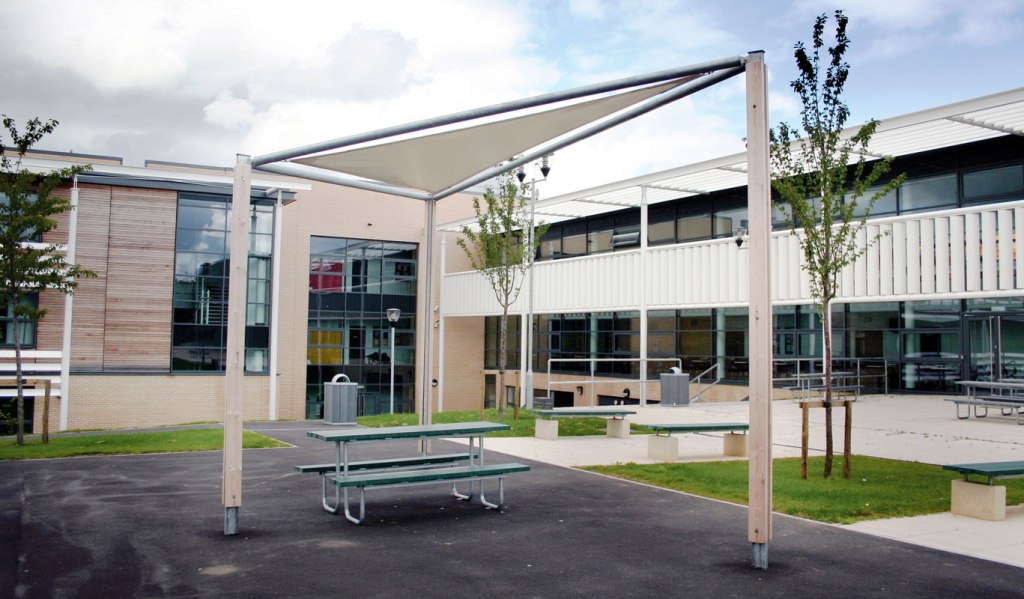
My placement school (School A) is a mixed secondary school based in West Yorkshire. They cater for students from the age of 11 to 18. School A pride themselves in their values which are ‘respect, resilience, integrity, compassion and ambition’ (School Website, 2020). The school has been able to turn themselves into a ‘very good’ school in just two years after a report of ‘unsatisfactory’ from Ofsted highlighting its hardworking characteristic. This further shows how a change in practice could lead to greater advantages for the school and its students.


Exploring the ‘About our School’ tab on the school website shows you the different activities and values the school plays host too. School A is supported by the 21st Century Learning Partnership, enrols student on to the Duke of Edinburgh Award, offers many clubs and extracurricular activities in addition to educational clubs such as ‘Homework Club’, and have a partnership with two other sixth form schools nearby. These opportunities and relationships set School A aside from other secondary schools as many of the opportunities provided here are not widely available.

History

School A opened as a technical school in the early 1900s. Technical schools often teach students skills leading them towards a specific career. Students often attended technical schools if they were unable to enter a Grammar school after taking the 11+ exam which has since been removed (Technical Education Matters, 2011). This means that schools are no longer split into Grammar, Technical and Public providing equal opportunities to all.

In the mid-1900s, School A became a Grammar school which meant they would now be seen as more desirable as Grammar Schools had the highest status in society. While this could be a positive aspect for the school, the status of a Grammar school was described as unfair as many middle class students were unable to receive the grades to gain entry as they did not have the funds to employ a tutor or buy additional resources to support their studies (Richardson, 2016). This factor provided students from a higher-class family with a higher probability entering a Grammar School. While School A is no longer a Grammar School it is still successful, showing the name of the school does not define its ability to provide excellent education for its students.

Initial Opinions

School A puts in 110% to provide their students with the best opportunities. The attendance of the students shows that the students enjoy their education here and appreciate the effort the school staff put in. The staff are all welcoming and have good relationships with the students showing firmness when necessary but also holding the ability to hear a student’s worries in a time of need. The diversity of the school shows that all students are welcome, and the individuals will grow and learn surrounded by different cultures, religions, and beliefs. This is especially important as England is a country compacted with many different cultures, religions, and beliefs.

Annotated Bibliography

School Background

GOV.UK. 2018. School A. [Online]. [Accessed: 09/04/2020]. Available From: https://www.gov.uk/school-performance-tables?_ga=2.109612869.1521353252.1586443364-1778311748.1586443364

This website is a public record of the statistics about the school. It provides academic information about the Secondary school and the sixth form as well as pupil attendance and population. This enlightened me on how the school fares academically in comparison to other secondary schools in the same area. Additionally, this website was able to provide information which could be accessed through the school website showing all information is available for public viewing. This website is particularly important as it allowed me to look at the statistics of the school allowing me to build a better image of the school and the circumstances the students come from.

School A. 2020. About our School. [Online]. [Accessed: 10/12/2019]. Available From: http://www.SchoolA.co.uk/about-our-school/

This website provides further information about the school and the various opportunities available for the students who study there. There are also many external links on the website making it easier to access public records of the school such as the previous Ofsted Report, Government records about the school and also the twitter account where up-to-date information is posted for parents and students to see. The use of the website allowed me to gain a broader understanding of how school A is and how it may differ to other school I have worked in. The website, due to the many external links, was very useful and very informative for students, parents and the public.

Tripartite Agreement Background Information

McCulloch, G. 2002. Local Education Authorities and the Organisation of Secondary Education, 1943-1950. Oxford Review of Education, 28(2-3), pp.235-246

This article discussed the Tripartite Agreement which was introduced through the 1944 Education Act. The article is discussed from the perspectives of Local Education Authorities and the opinions they shared for or against the Tripartite system. While the tripartite agreement is discussed and understood in more detail, the article also discusses the Crowther Report (1959) and the Newsom Report (1963) to provide a political prospective. This article helped me understand the aftermath of the Education Act 1944 and the opinions the country had regarding this change to the education system.

Richardson, H. 2016. Grammar schools: What are they and why are they controversial? [Online]. [Accessed: 09/11/2019]. Available From: https://www.bbc.co.uk/news/education-34538222

Provides and explanation about what Grammar schools are, when and why they were introduced and the inequalities of the 11+ programme that led to the eventual “phasing out” of many Grammar schools. This website helped me understand the history of the tripartite agreement and an understanding of the selection process used to gain entry into a Grammar school. This website was concise, yet informative allowing be to gain a general understanding of Grammar schools and other aspects that link to them.

Technical Education Matters. 2011. Technical and Secondary Technical Schools. [Online]. [Accessed: 04/04/2020].  Available From: http://technicaleducationmatters.org/2011/04/24/technical-and-secondary-technical-schools/

Provides a background of how Technical school were introduced and their importance in the education sector after the 1941 tripartite agreement. Amongst the three categories of schools; Grammar, Technical and Secondary Modern, Technical schools were seen as “second best”. In 1958 1.5 million students in secondary modern, 638,000 in grammar and only 95,000 in secondary technical schools due to the fact that technical schools were associated with a particular occupation or industry. This information was helpful in understanding how the three types of schools varied and how they were viewed in society.

Images Used

Dalakoura, M. 2018. How the improvement of long-term employability skills can decrease employment rates in Europe. [Online]. [Accessed:22/04/2020]. Available From: https://ied.eu/project-updates/how-the-improvement-of-long-term/

Docwra, R. 2016. Brexit and the need for Respect. [Online]. [Accessed: 23/04/2020]. Available From: https://richarddocwra.com/brexit-need-respect/

Green, C. H. 2016. Integrity: What’s up with that? [Online]. [Accessed: 23/04/2020]. Available From: https://trustedadvisor.com/trustmatters/integrity-whats-up-with-that-2

Jordynsrockyjourney. 2018. Please have Compassion. [Online]. [Accessed:23/04/2020]. Available From: https://jordynsrockyjourney.wordpress.com/2018/03/14/please-have-compassion/

KinBox. 2019. Raising Multilingual Children is Hard – What Makes it Easier? [Online]. [Accessed: 22/04/2020]. Available From: https://www.kinbox.com/raising-multilingual-children-is-hard-what-makes-it-work/

Nowlan, K. 2015. Six building blocks of resilience for Line Managers. [Online]. [Accessed: 23/04/2020]. Available From: https://www.personneltoday.com/hr/six-building-blocks-of-resilience-for-line-managers/

Photos Public Domain. 2011. Ambition. [Online]. [Accessed:23/04/2020]. Available From: https://www.photos-public-domain.com/2011/09/01/ambition/

Sadler Training. 2017. 6 Benefits of Teamwork in the Workplace. [Online]. [Accessed:22/04/2020]. Available From: https://www.sandler.com/blog/6-benefits-of-teamwork-in-the-workplace/


Personal Learning and Development

(Student ID: 201122240)

A personal record of gained skills and experience with evidence.

On my placement I was able to work with students ranging from 11 to 16 years old all varying in attainment. I gained an insight of the different behaviours through supporting classes but also through discussions with teachers. Before a lesson, each teacher would discuss which child require more support to ensure I supported the students who required it. These discussions with the staff often became the most important parts of my day.

Teaching Probability

My placement provider wanted me to support teachers and the students rather than teach classes myself. This would allowed me to see all age groups study but also ensure that their studies are not interrupted by a lesson taught by an unqualified teacher such as myself. I was given the opportunity to support one student who arrived after the lesson began. This student had missed the introduction of a new topic so I was required to catch them up on the work to ensure the student did not miss vital mathematical knowledge. As the student arrived late, I was able to witness the class teacher teach the topic before I taught it myself, something that benefited me as it allowed me to understand the concept and method of how to teach the topic before i taught it.

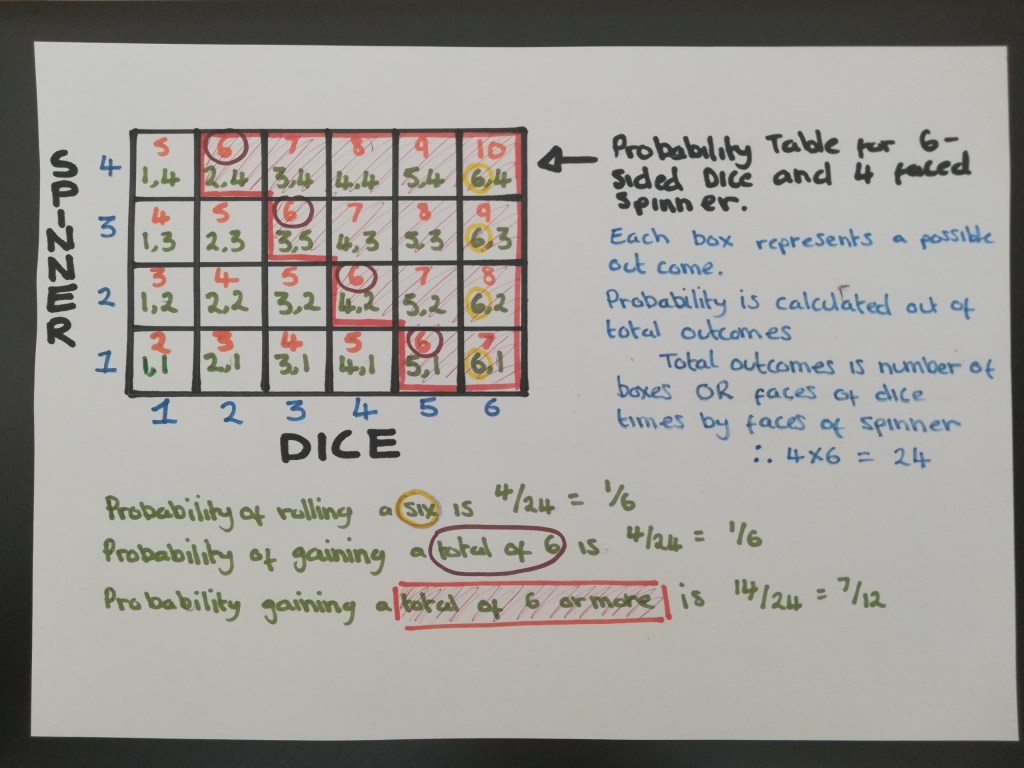
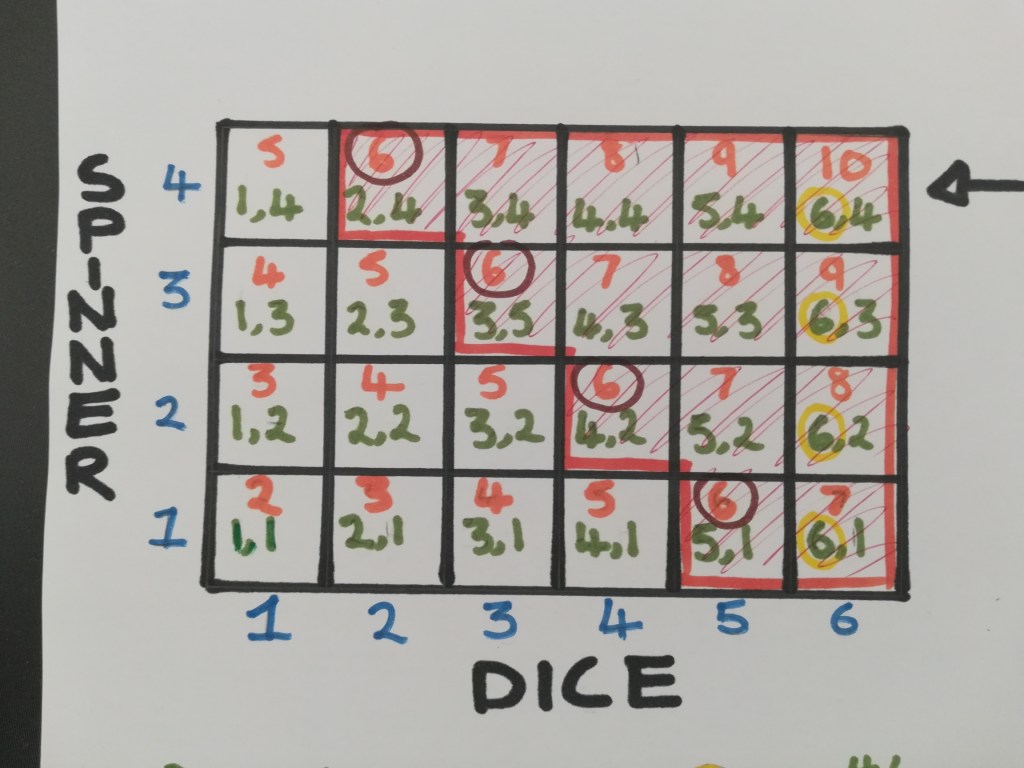
As the lesson was an introduction to probability, the first example included a spinner with numbers 1 to 4 and a dice with numbers 1 to 6. I explained what probability was then asked the student to copy and fill in a probability table with all the possible number combinations. I talked them through the process to ensure they conceptualised the information rather than just follow a procedure. I then asked the student to count how many probability combinations are available and explained that this in what all probabilities in this set of data will be out of. To work out how many times the number 6 will come up is the same as working out the probability of rolling a 6 out of the 24 different possible combinations.

To help the student understand the possible totals of the number spun on a spinner and the number rolled on a dice, I asked the student to write the total of the various number combination on top (the numbers written in red on top of the co-ordinates in example below). The student was then asked to work out the probability for rolling and spinning a total of 6 which would be 4/24 simplified to 1/6. This was what the teacher had taught so far so I stopped my explanation here and asked the student to follow the same instructions for the other examples displayed on the board. I continued to sit with the student to ensure they understood the topic, then allowed them to work independently while I helped other students.

*Below is a colour coded example of the work completed with the student with explanation where required. This is not the students work, it is a replica of the work completed.*

Probability, I find, is a hard to explain and teach but easier to answer questions on. Because of this opinion, it was important for me to ensure the student understood what I explained. Furthermore, as this teaching session was unplanned, I made sure understood what I was explaining before I taught the student. This experience was interesting as it was something I had not completed previously. The fact that it was unplanned was really helpful as I was able to test my own understanding and ability to teach under pressure. Therefore, the experience was enjoyable as I was able to test my autonomy and ability to work under pressure.

Skills Developed

As discussed in my placement aims, I had not worked in a secondary school prior to this experience so I was not sure what to expect. I wanted to develop my experience of working with children and young people to ensure I understood how different year groups vary in characteristics and knowledge. I developed my leadership skills as I was required to support all children in mathematics lessons ensuring children behaved and completed the majority of the work set for them. I expanded on my team working skills as I worked alongside different members of staff who, through observation and questioning, taught me the possible issues and solutions to ensure students remain focused. Furthermore, I developed my time management and organisation skills as I took two buses to arrive at my placement school.

This placement allowed me to develop many skills and discovery a variety of ways on how to become an effective teacher through various observations and student supporting opportunities. This experience, while it was different to previous school placements, was also the most challenging for me as supporting teenagers is something I require more confidence in. It allowed me to grow and enjoy working with teenagers, taking away skills which will be useful throughout my teaching career.

Annotated Bibliography

Conceptual VS Procedural Teaching and Learning

Ball, L., D. 1988. Unlearning to Teach Mathematics. For the Learning of Mathematics. 8(1), pp. 40-48

It was understood that teachers often enter the field of teaching with an understanding of how they think children should be taught based on personal experiences. This study was conducted to help some trainee teachers understand the importance of teaching a correctly to ensure personal understanding and the ability to ensure students understand as well. This article showed how hard it can be to learn a new topic or a pre-learnt topic from a different angle. Understanding different perspectives is important to ensure the students understand the concept as well as the problem-solving procedure.

McCormick, R. 1997. Conceptual and Procedural Knowledge. International Journal of Technology and design Education. 7(1), pp.141-159

This article considered the use of conceptual and procedural teaching in technology subjects. Technology while it is a stand-alone subject, it brings in concepts from other subjects such as mathematics, science and computing. This article helped me understand that in some situations, teaching the procedure may be the easier option but it is still important to show alternative processes to help students understand the concepts behind them.

Rayner, V., Pitsolantic, N., and Osana, H. 2009. Mathematics Anxiety in Perservice Teachers: Its Relationship to their Conceptual and Procedural Knowledge of Fractions. Mathematics Education Research Journal. 21(3), pp.60-85

This article discussed the relationship between persona experiences of mathematics learning to the anxiety of mathematics teaching. It was discussed that teachers often use own experiences to influence their teaching techniques. If teachers were taught conceptually, they suffered less anxiety for teaching mathematics than teachers who were taught mathematics procedurally.  This study helped understand the longitudinal effect conceptual or procedural teaching can have on an individual allowing me to see the importance of teaching to ensure the student understands the concepts rather than just knows how to solve a problem.

Surif, J., Ibrahim, N. H., Mokhtar, M. 2012. Conceptual and Procedural Knowledge in Problem Solving. Procedia – Social and Behavioural Sciences. 56(1), pp. 416-425

This article discusses the use of procedural and conceptual learning for chemistry in Malaysia. It is discussed that conceptual learning is necessary to understand chemical substances and their properties while procedural learning is necessary for problem-solving. The study conducted involved 200 students in 4 different schools and it was discovered that students were using alternative routes to find a solution rather than understanding the chemicals or the procedures. This article showed me that is students are not taught the correct methods and are supported to understand the topic, then they will result in guess work where they sometimes might get the right answer. This process will not help students and it will negatively affect their education as they would be learning incorrectly.

Tevfik, I., and Ahmet, I. 2003. Conceptual and procedural Learning in Mathematics. Journal of the Korea Society of Mathematics Education Series D. 7(2), pp.91-99

The use of procedural and conceptual teaching varies in different countries. This article discussed the use of procedural teaching in one Turkish school where achieving the correct answers and gaining a good grade was the main aim for students. Where marks are concerned, if learning the concept behind a process will not provide the student with the answer to a problem, the learning the concept is not necessary. This article helped me understand that teaching varies in different countries and the aims of learning and educating students also varies. While conceptual will help understand a topic, the understanding of a topic is not seen as necessary for some students in turkey and is therefore seen as irrelevant.

Images Used

ed place. 2020. Outcomes and Probability (3). [Online]. [Accessed: 22/04/2020]. Available From: https://www.edplace.com/worksheet_info/maths/keystage3/year9/topic/423/2518/outcomes-and-probability-3

Kalai, G. 2017. TYI 30: Expected number of Dice throws. [Online]. [Accessed: 22/04/2020]. Available From: https://gilkalai.wordpress.com/2017/09/07/tyi-30-expected-number-of-dice-throws/

Learning in my Placement

(Student ID: 201122240)

This section will discuss the learning environment by critically analysing two papers relating the ideas discussed back to School A and how they utilised spaces.

The environment education takes place in can support or hinder a student’s education. If students are not comfortable in a setting, then they may not be able to concentrate and hence will not be able to learn properly. The conceptualisation of an environment, as suggested by Lefebvre’s theory, is important in helping students understand its use and form a connection with it (Chappell and Craft, 2011). For example, a specific classroom may be associated with maths due to mathematics lessons taking place in that classroom all year. If the mathematics lesson gets moved to a room which students associated with art, then the concentration and learning may decrease. Forming a relationship with settings can help students concentrate but, a change in the setting may harm the student’s concentration as well. Jamieson et. al. (2000) and Bryant et. al. (2009) discuss different learning environments in an attempt to understand the impact it can have on an individual’s education.

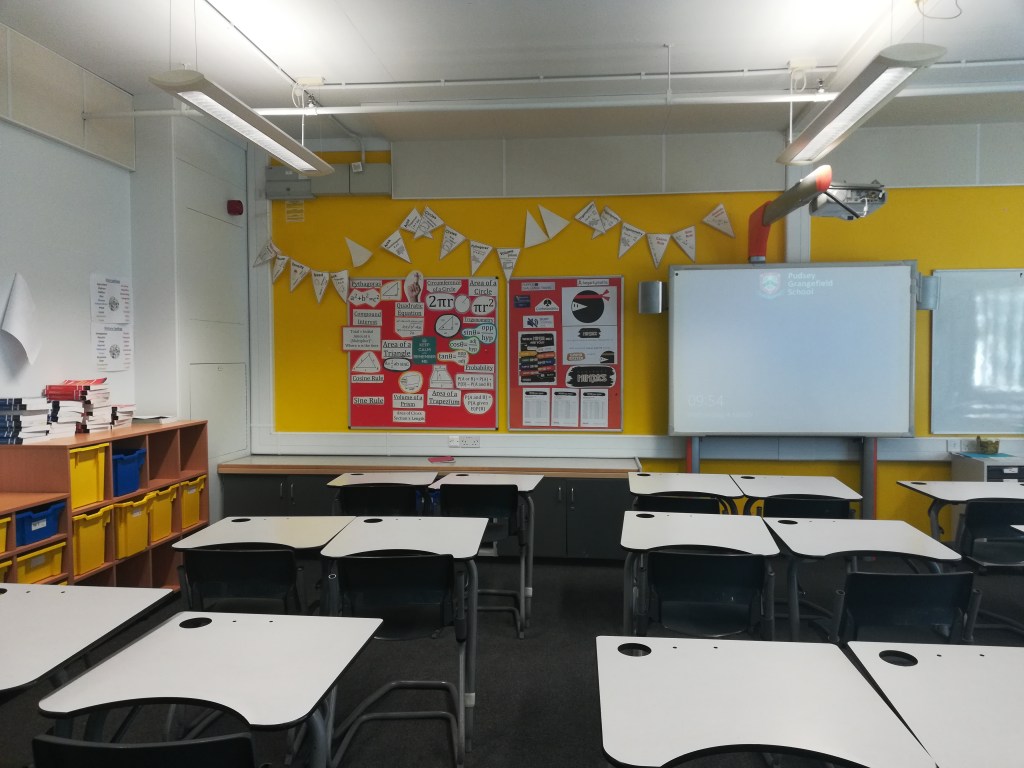
Jamieson et., al. (2000) focused their research on Australian Universities to understand the impact different types of learning environments and resources. Jamieson et., al. (2000) stated that the environment shapes the teaching, as a better suited setting would result in better teaching and learning. They discussed the importance of developing settings to support student learning rather than adapting teaching within an environment. This technique is evidenced in School A as a change from the old building to the new building in 2016 saw a better suited, open, and bright environment created for students to study in, the below video helps display this.

*This video and the images used was created and taken by myself*

While the research conclusions from this study are valid, the research is regarding university learning and teaching which can differ to the education taking place in a secondary school environment like School A (Jamieson et. al., 2000). Additionally, the research study was conducted in Australia, a country with a different curriculum and education objectives. Thus, while the research can be adapted to help understand secondary education, the setting is both different and far from that of the UK.

Bryant et., al. (2009) discuss the use of an area in Loughborough University called Open, which is used for multiple purposes. Using one space for many reasons can help utilise the space but it can also makes it harder to study independently. Bryant et. al. (2009) saw students getting distracted by students who were socialising, but due to the nature of the environment, they were unable to complain. While students who want to study independently or socialise have the option to move to a better suited setting, this is not always available on a university campus. School A also has an open area like Loughborough University which is used for socialising during break and lunch, and for teaching during lesson time. Allocating different times for different activities, like School A have done, may help utilise the space better without it affecting student’s studies.

This study was also conducted in a University where the education varies from secondary education. The study was conducted in one environment as it was a case study, but if the same research is conducted in many different universities and education environments like public libraries, collages, and school, then the results from that research may help understand if open-space learning is suitable for students, or not. Furthermore, Bryant et. al. only observed the students so the research is based on opinion and assumption limiting the reliability of the results.

Both articles discussed are regrading university spaces and both consider the environment in relation to education. While Jamieson et., al. (2000) discusses adapting the environment to suite education, Bryant et. al., (2009) considers the use of one environment for different activities. Both research articles can be used to support the learning environments in School A as all classrooms in School A are designed to ensure suitability for specific subjects. Classrooms that play host to Mathematics all have the same mathematics displays to ensure students are able to feel comfortable in any rooms. School A also have open-spaces on each floor to support teaching and learning. Students seem to appreciate this set-up and their education does not seem to be hindered by it. In fact, learning in open spaces has allowed students to feel free and ensure deepened concentration as they are not confined within four walls.

To conclude, as discussed by Chappell and Craft (2011), the relationship a student builds with an environment is important to ensure the student is able to work and the teacher teach. If the environment is not suitable for learning, as shown by Bryant et., al (2009), the education in that environment may not be as efficient. Therefore, the environment is just as important as the teaching and learning can be supported more appropriately if conducted within a better suited setting, something seen in School A.

Annotated Bibliography

Learning in Different Environments

Bryant, J. Matthews, G. and Walton, G. 2009. Academic libraries and social and learning space: A case study of Loughborough University Library, UK. Journal of Librarianship and Information Science. 41(1), pp 7-18

This article also discussed an environment in a university space, but this study supported my understanding of open space learning which I witnessed at my placement. This study discussed the use of an open space in a library to help understand how different student perceived it. One space was used for group work, independent work and socialising yet the organisation of the space seemed to be perceived as positive from the student observed. While it was harder to study independently, the area encouraged collaborative work, a theme strongly believed in School A.

Chappell, K. and Craft, A. 2011. Creative learning conversations: producing living dialogic spaces. Educational Research, 53(3), pp.363-385

This article focused on the development and understanding of creativity in learning and teaching through discussions with different group of students and staff from the Aspire programme and the Dance Partners for Creativity programme. Lefebvre’s idea of the representation of a learning environment was discussed alongside the idea’s students hold about creative learning and teaching. This article supported my understanding of ensuring the child is at the centre of education making sure the environment is suitable for them to ensure maximum learning. Learning about Lefebvre’s theory also helped me understand the importance of the relationship between an environment and the learning or teaching that needs to take place.

Jamieson, P., Fisher, K., Gilding, T., Taylor, P. G., and Trevitt, A. C. F. 2000. Place and Space in the Design of New Learning Environments. Higher Education Research & Development, 19(2), pp.221-236

Although this article was regarding University environments rather than school environment, the ideas discussed are still relevant. The discussion is heavily influenced by a comparison between online learning and learning in person. Online learning is seen as inferiors to in person learning due to the miscommunication, difficulties of technology and any distractions that may occur in the physical location. The design of different environments was also discussed suggesting that the learning space should be designed for multiple uses with the environment being ergonomically designed to ensure flexibility for all students and subjects. This article helped me understand how different learning environments may help or hinder the learning process and the necessity of ensuring the environment is suitable for the group and for the topic being taught.

Educational Provisions Available

(Student ID: 201122240)

This section will look at how School A use and adapt the National Curriculum to suit their vision, any extra curricular activities, and the materials staff use to design their lessons.

Curriculum

School A focus their education around the requirements of students. They look at what is necessary post-compulsory education and ensure their students are taught the relevant skills. School A has previously held mock interview sessions, held careers fairs and has played host to numerous assemblies teaching their students the importance of collaboration and community (School A Website, 2020). This helps students prepare for life after School A.

Content

Key stage three study for 50 hours per week with the majority of their week consisting of English, Mathematics, and Science lessons (School A Website, 2020). These subjects are seen as the most important as they provide students with basic skills and knowledge that can be applied elsewhere. They also study humanities, a language, and art allowing them to study in a range of different areas before they begin to focus their studies towards a specific direction. Subjects for students in KS4 and older are split into compulsory and optional subjects. The compulsory subjects include English Literature, English Language, Mathematics, Combined Science, PE and Citizenship. These subjects provide students with the basic academic knowledge required before leaving school as well as an understanding of relationships, society and culture through studies in citizenship. Post-16 at School A does not only consist of studying within one school, but the students are able to study at a choice of two other schools due to a partnership all three schools hold. This ensures students are able to study the subject they desire. Therefore, School A ensure their students are not only academically prepared to leave school, but socially prepared as well.

Student Learning Opportunities

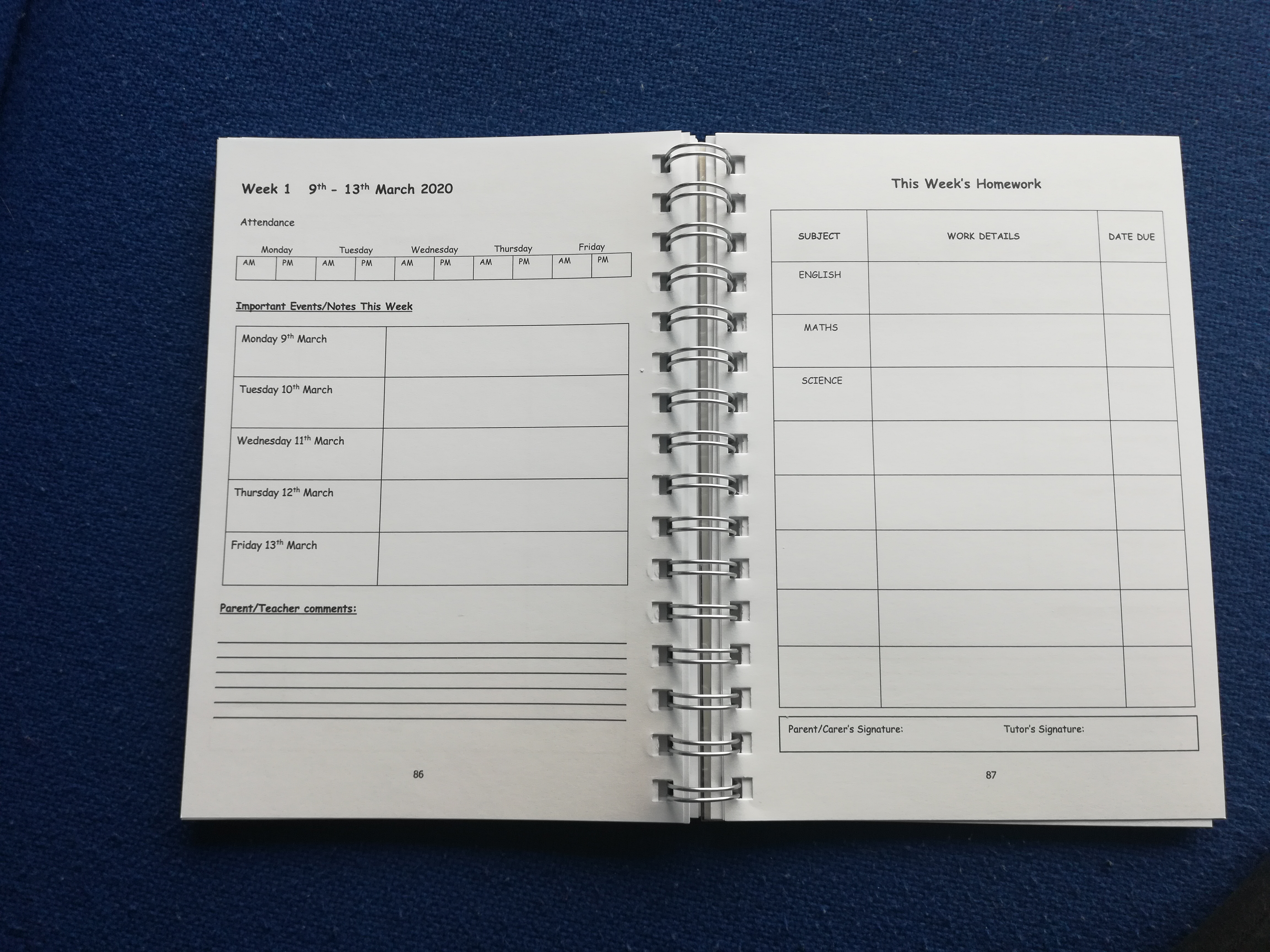
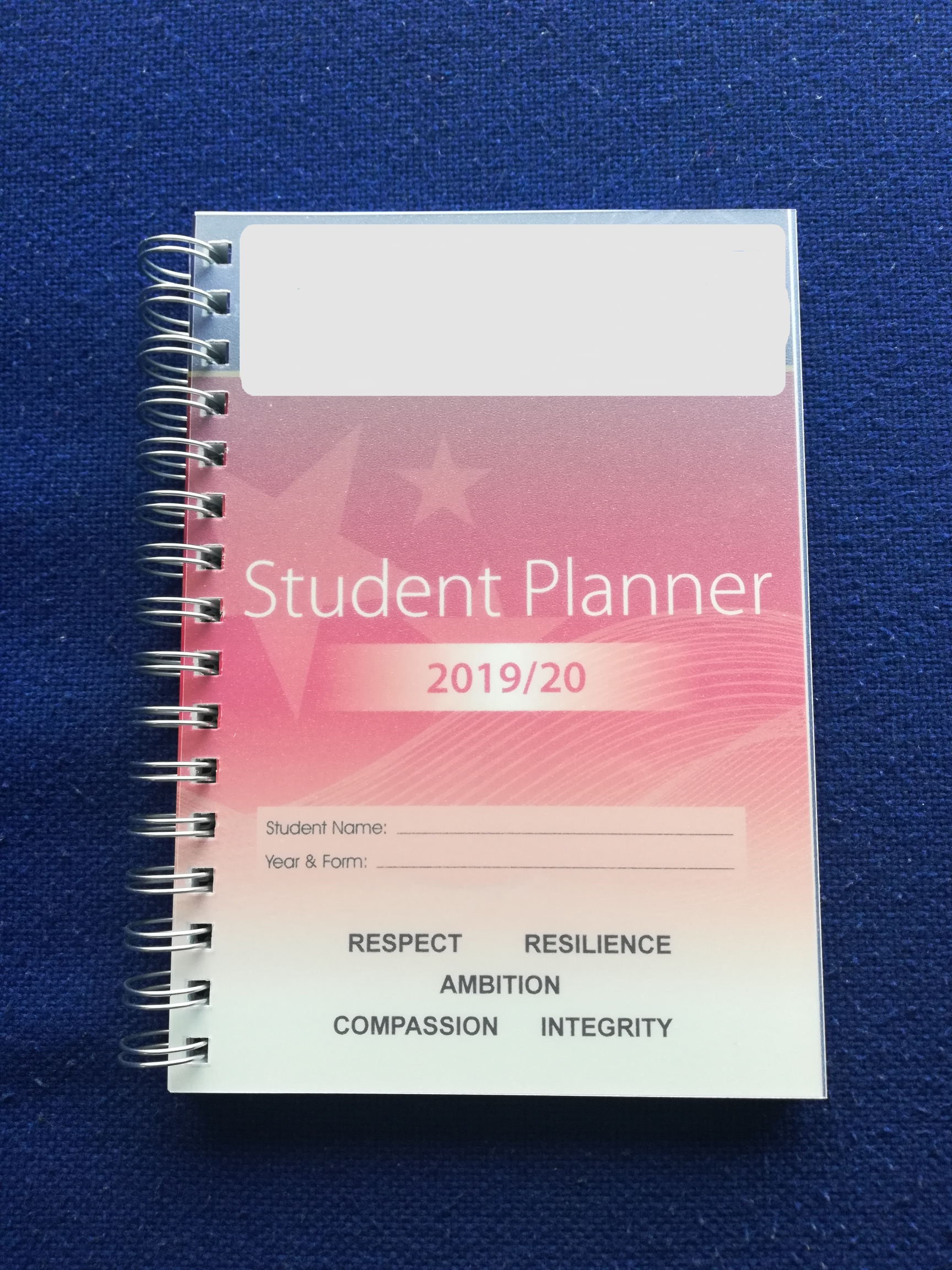
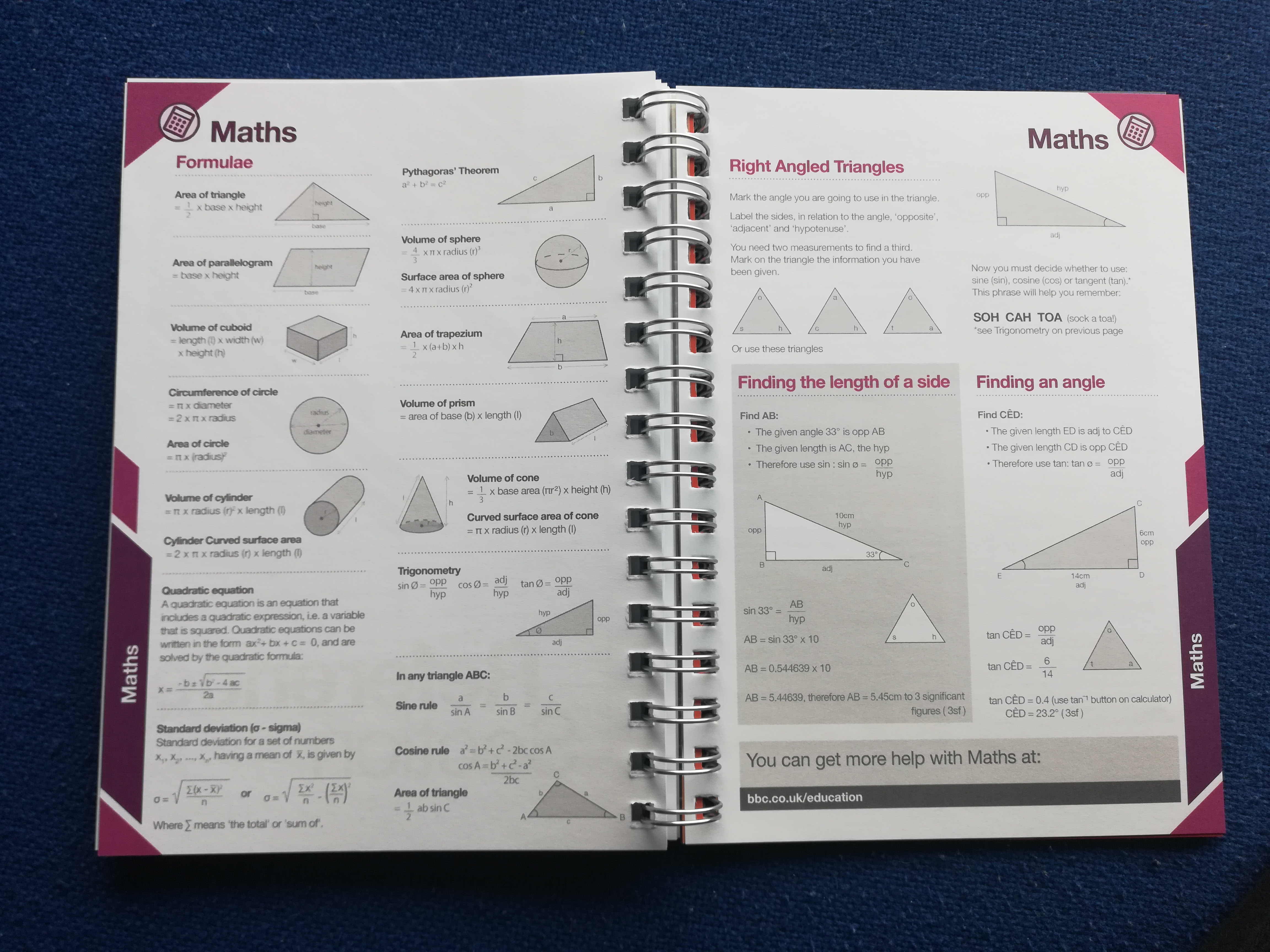
One of the key resources all students and teachers use in their lessons at School A are the school planners. The planner includes a diary where students keep track of assigned tasks, a timetable so students know when and where to go, and a whiteboard which can be used in lessons (shown below). The whiteboards are used in every lesson and students are granted permission to write on tables if they come ill-equipped. Although this is peculiar, it shows that teachers see their student’s participation and involvement in the lesson as more important than punishing children for not possessing all the required materials.

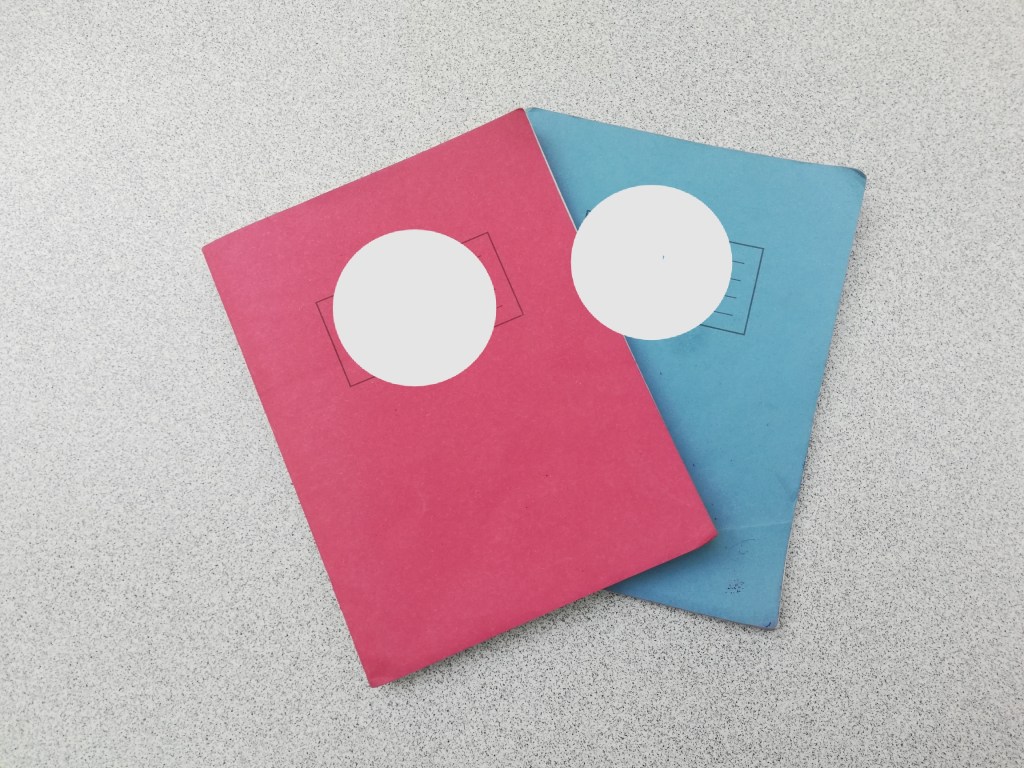
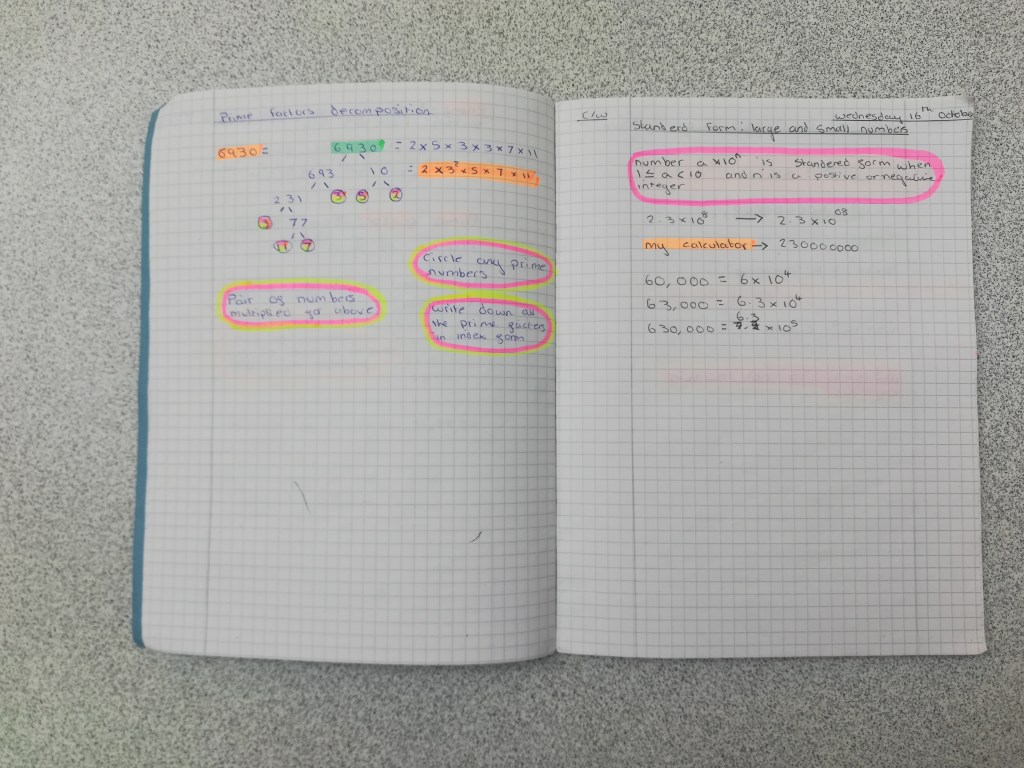
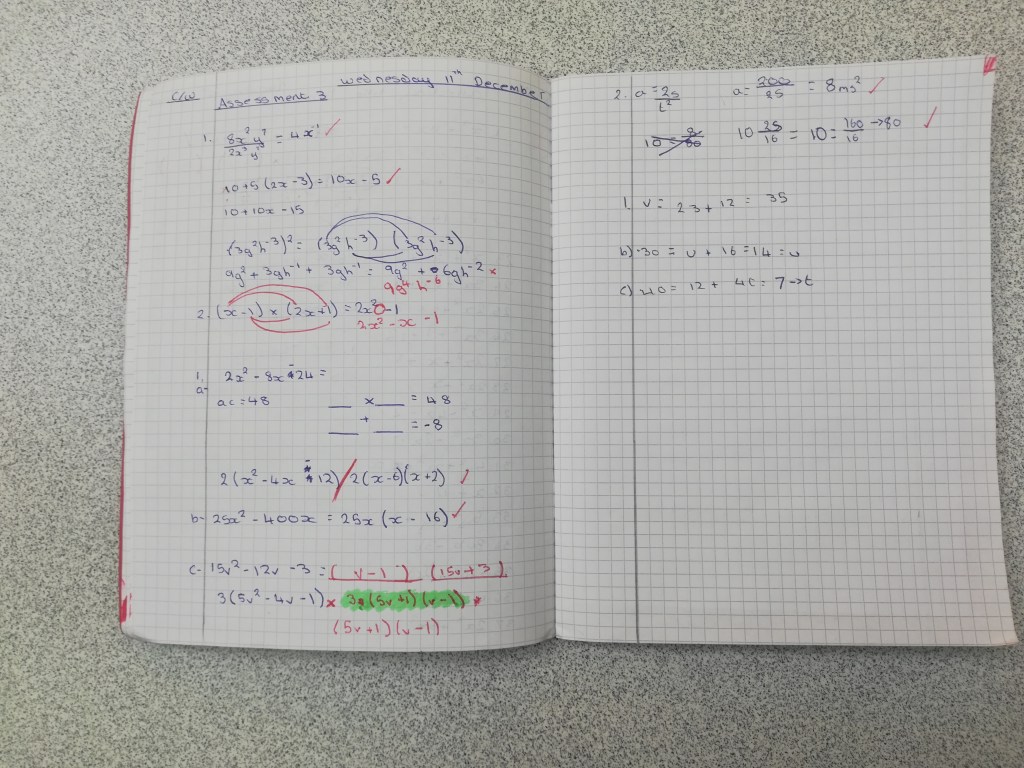
Students at School A also use two separate books in their mathematics lessons. A red book is used to complete all class work and homework while a blue book is used to write notes about the lessons being taught. This allowed students to use both books together something which would have supported me as a student. Writing all my notes in one book would have come in handy for revision purposes as well as making it easier to look at my notes while completing set tasks.

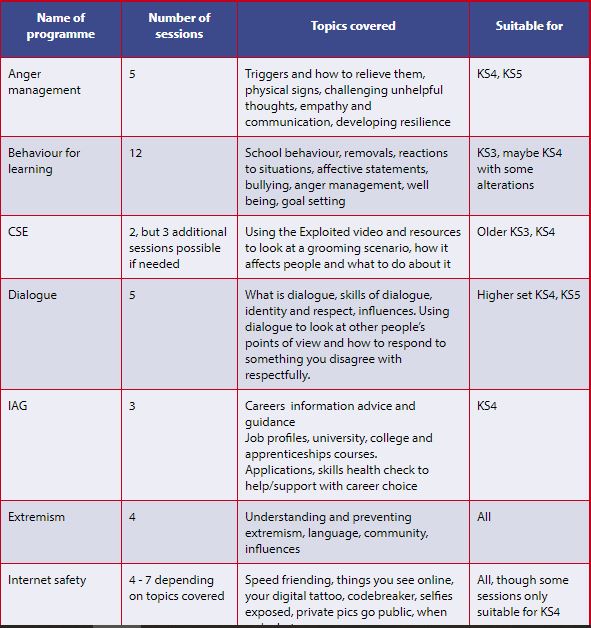
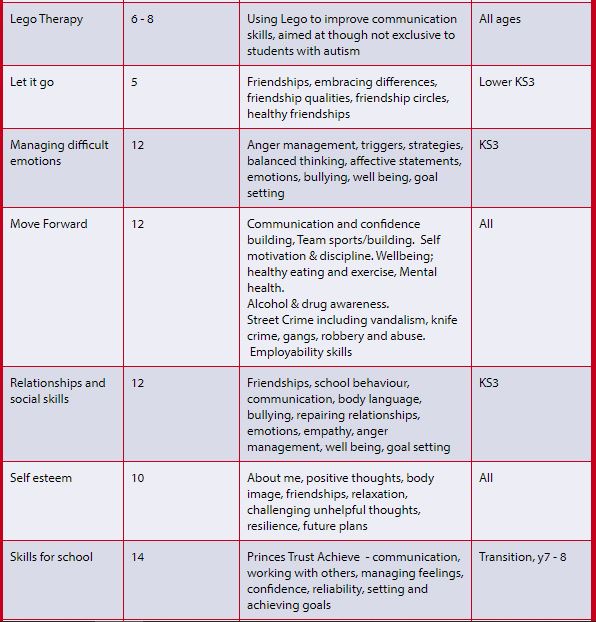
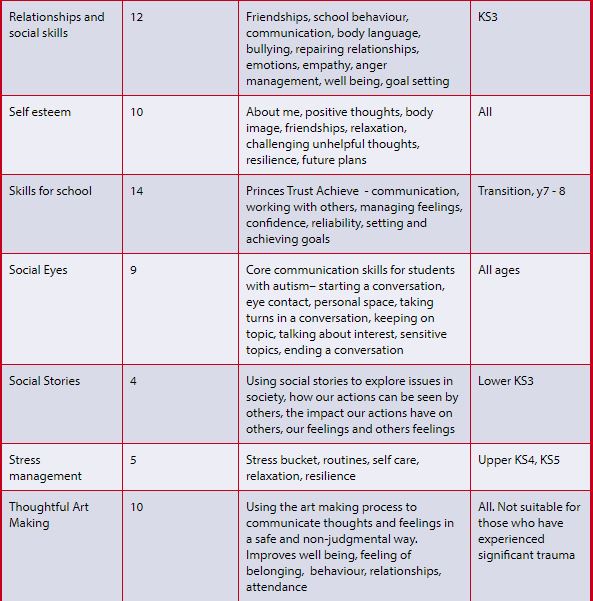
The school also offers health and well-being sessions which are sometimes targeted at particular year groups such as a session of exploitation and grooming as that is more suitable for KS4 students. Sessions such as the ‘self-esteem’ is suitable for all students and therefore widely available at School A (School Website, 2020). These sessions raise questions and allow students to think about topics which they may not have considered previously. It creates a conversation to ensure all students are not only academically prepared but also socially prepared for leaving school.

Students at school A are also encouraged to participate in the Duke of Edinburgh’s (DofE) Award. The DofE allows students to create bonds with friends but also establish new bonds of friendships through skill development, volunteering, planning and completing an expedition. This experience also helps develop skills necessary in everyday life such as organisation, communication and team work. As a graduate of the Bronze DofE, I know this experience can be mentally and physically challenging but in the end, all participants are proud of what they have achieved. To learnt that students now receive more support assures me that the students of today are provided and lead towards becoming the best version of themselves.

Although, many of the opportunities available require the student to give up extra time they may have, this may not be possible for students who struggle with a home-school balance. Activities like the DfE require a small fee, something all student may not be able to afford. Also, due to cultural restrictions, some student’s may not be allowed to participate in extra-curricular activities such as the over-night expedition as they may not be allowed to stay away from home. This results in the accidental exclusion of some students resulting in unfair opportunities, so it is important to ensure there is something available for everyone.

Staff Support Materials

Staff at school A utilise a range of different online platforms to help their students develop and solidify their mathematical knowledge. With technology becoming more popular, it makes it easier for teachers to assign and check on student’s progress. It also helps student as they are able to complete their assigned homework on a computer, iPad or even their personal mobile devices.

ActivInspire studio:

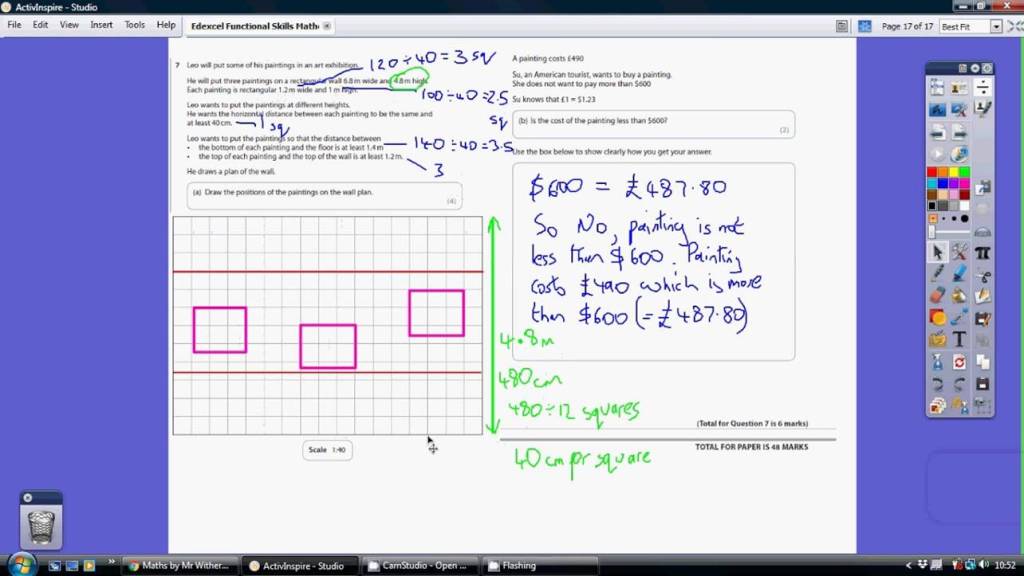
At school A the Mathematics department have a lead staff member for KS3 and KS4. These members of staff are in-charge of creating a skeleton of a slideshow for teaching staff to use in their lessons. These slides are created on ActivInspire Studio. Teaching staff use these already created slides and change them to suit their students. I understand that in order to ensure all students complete the necessary work required a structure needs to be put in place, but one staff member creating and deciding what all the other staff will teach is not fair. Teachers have different methods of teaching and they understand their students’ progress, so it only seems right to allow each teacher to be provided with a criteria for their lesson but create their lessons independently.

Hegarty Maths:

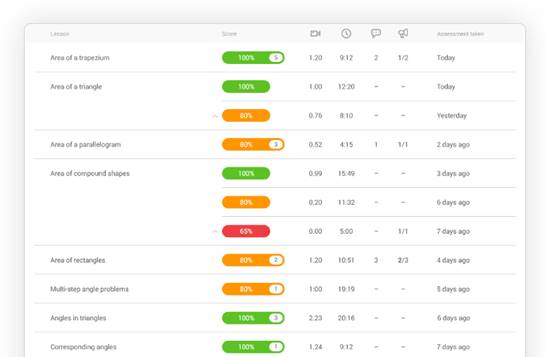
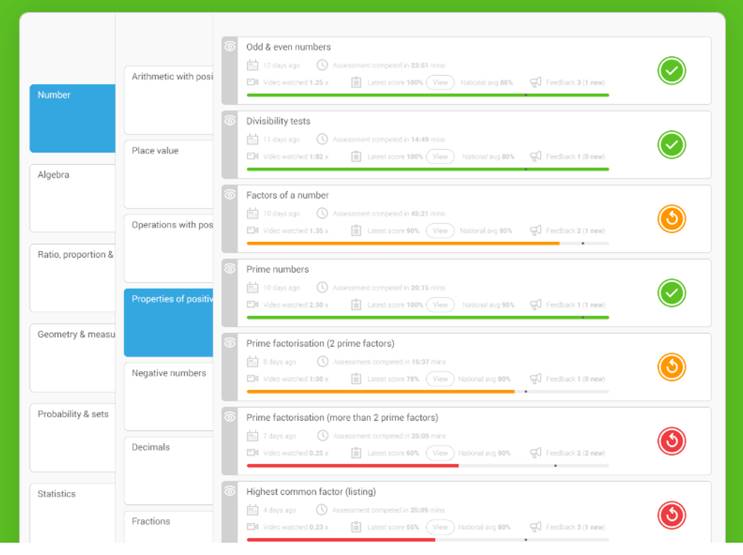
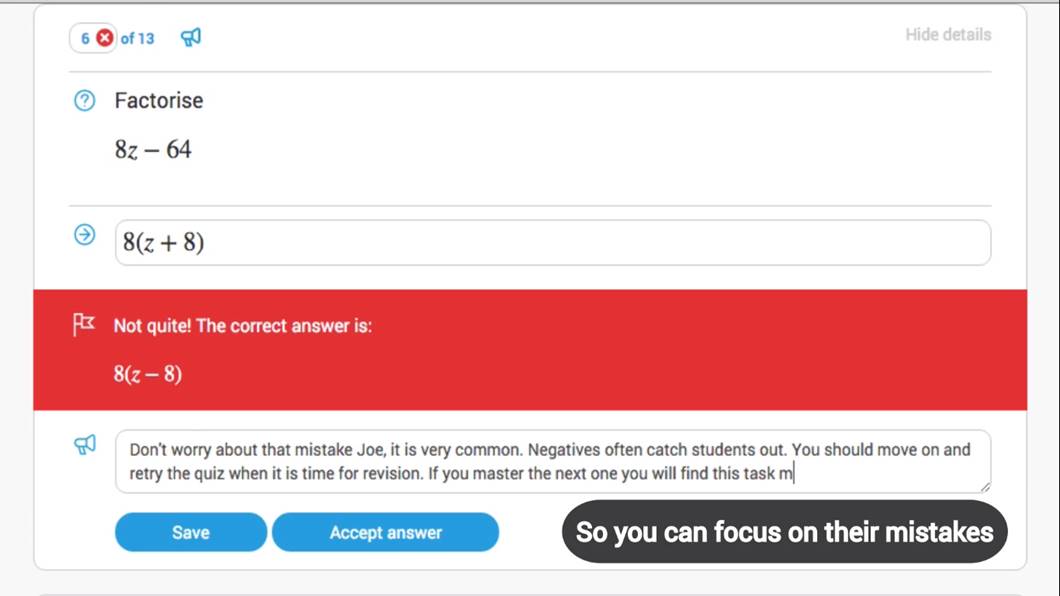
Hegarty Maths is a video platform where the creator uploads videos that teach the viewer a particular mathematical topic and tests their understanding. Teacher can see what students have watched, whether they completed the task or not, how many tries it took the student to get above 70% and which questions they struggled on. A space is also provided under each question for the student and teacher to write comments and communicate to each other about that topic. Hegarty maths makes it easier for the teacher to see the progress of their student as well as address areas the whole class might be struggling in. It ensures all students have the opportunity to complete their work anywhere and at any time. An online mathematics homework platform similar to Hegarty Maths is what supported me with my studies which is why I see this resource as effective and efficient.

*All images used are screengrabs from the official website and not from a staff account at School A*

Class Charts:

Class charts is an application used to record students’ progress. It is linked to all staff computers at School A and provide the details of all students. Access to class charts is available to staff, students and their parents through the school website allowing parents to see their child’s progress and raise queries directly to the teacher if they deem a comment inappropriate. The behaviour policy in School A consists of three verbal warning which results in a negative. These negatives can be applied onto Class Charts. Teachers can also fill in positives which is positive feedback due to good behaviour or anything else a teacher deems appropriate enough to reward. Class charts is also linked to Hegarty Maths so a teacher can see the progress of a student in school compared to the Maths work they conduct out of school.

I believe class charts to be particularly helpful especially since parents are provided with access to the same information shared by teaching staff. Parental involvement is really important to me so to learn School A has a platform that connects the teacher, student and parent together is effective. Furthermore, as ClassCharts links the whole school, it ensures all teachers are able to check up on students who they may be concerned about but do not teach. this helps with safeguarding as well as ensuring all students are comfortable within the school.

Student Restrictions

Many of the resources discussed are accessed through a computer using the internet, something which all students may not have access to. Some teachers ensure that alternatives are provided to students, but this could lead to them feeling excluded. It is important to ensure all students have the same opportunities to participate in the activities or alternatives must be provided for all students rather than the few concerned. This will ensure all children, no matter what their socio-economic background, culture, or access to technology, are all provided with equal learning opportunities.

All staff support materials discussed above are very important in the running of a standard day in the mathematical department in School A. ActivInspire provides the slides, Hegarty Maths has videos and corresponding homework, and Class Charts provides a documentation of a student’s progress. While all four have different purposes, I believe Hegarty Maths is the most useful as online revision is what allowed me to excel in my mathematical knowledge at GCSE and at A-level so it will provide students at School A with a key resource to enhance their knowledge.

Annotated Bibliography

Teaching and Learning Aids

Class Charts. 2020. Home Page. [Online].  [Accessed: 10/03/2020]. Available From: https://www.classcharts.com/

This website provided me with an insight into what class charts can be used for. Despite exploring it earlier at School A, I was unable to see the full extent of the website due to student’s personal information being recorded on it. The images and the videos on this provided on this site allowed me to see all the ways the site would be useful in a school without having to look at student’s private information. I was able to gain a better idea of how to operate class Charts and the different section it has to support student development.

Hegarty maths. 2020. Built to make independent learners. [Online]. [Accessed: 10/03/2020]. Available From: https://hegartymaths.com/

Hegarty Maths is a programme used by the whole Mathematics department at school A to help them understand the progress of their students and support them in the areas they may be struggling in. It provides up-to-date information about the homework completed by students allowing teachers to instantly see which students have and have not completed the designated tasks. This website helped me see the different sections of Hegarty Maths with images and video demonstration on how to use it.

Promethean World. 2020.  ActivInspire. [Online]. [Accessed: 10/03/2020]. Available From: https://www.prometheanworld.com/gb/products/lesson-delivery-software/activinspire/

This website provided me with background information about ActivInspire, the programme used by School A to operate class Smart Boards. The website included the way ActivInspire can be used with a video to show its usefulness. While I already understood how ActivInspire can work, the website allowed me to independently explore and enhance my understanding of the programme.

Richard Byrne. 2014. Core Features of ClassCharts. [Online]. [Accessed: 13/05/2020]. Available From: https://www.youtube.com/watch?v=KsXQxjSfXpk

This video demonstrates how Class Charts could be useful. It provides a tutorial for new users allowing the viewer to understand the various features available. this video helped me understand the different uses for Class Charts and how it could be used to enhance a students learning and a teachers teaching.

School Information

School A. 2020. About our School. [Online]. [Accessed: 10/12/2019]. Available From: http://www.SchoolA.co.uk/about-our-school/

This website provides further information about the school and the various opportunities available for the students who study there. There are also many external links on the website making it easier to access public records of the school such as the previous Ofsted Report, Government records about the school and also the twitter account where up-to-date information is posted for parents and students to see. The use of the website allowed me to gain a broader understanding of how school A is and how it may differ to other school I have worked in. The website, due to the many external links, was very useful and very informative for students, parents and the public.

Images Used

Class Charts. 2020. Home Page. [Online].  [Accessed: 10/03/2020]. Available From: https://www.classcharts.com/

Corbettmaths. 2020. Welcome. [Online]. [Accessed: 10/03/2020]. Available From: https://corbettmaths.com/

Hegarty maths. 2020. Built to make independent learners. [Online]. [Accessed: 10/03/2020]. Available From: https://hegartymaths.com/

Marta. 2017. School Subjects. [Online]. [Accessed: 22/04/2020]. Available From: https://www.icbeltrami.edu.it/mycaelab/2017/03/11/school-subjects/

Mrbartonmaths1. 2018. Bernie Westacott – Part 6 – Beginning of Numbers. [Online]. [Accessed: 02/04/2020]. Available From: https://www.youtube.com/watch?v=AfQ3kGz5sMY

Promethean World. 2020.  ActivInspire. [Online]. [Accessed: 10/03/2020]. Available From: https://www.prometheanworld.com/gb/products/lesson-delivery-software/activinspire/

Ethical Consideration

(Student ID: 201122240)

This section will look at all aspects of safeguarding while working in School and what School A does to help with this.

Safeguarding refers to protecting children from harm and ensuring they receive the correct care (NSPCC, 2020). Working with children can be a difficult task as there can be many safeguarding issues. To ensure no safeguarding issues arise, I made sure I was aware of all the safeguarding procedures, officers and health and safety rules to ensure the safety of everyone.

To support safeguard children, the school have an anonymous online system, named ‘on call’. This allows teachers to send an alert to the safeguarding officer who then contacts that child individually to try and address the issue. This is a system I have not seen before, but it is safe, secure and effective as staff usually arrive at the scene in under 5 minutes. The school website also provides useful links to safeguarding or anonymous health and safety websites. This provides students with the opportunity to discuss their issues with the correct organisation and for staff to ensure their students are provided with the correct support where necessary.

As my placement was in a secondary school, teenagers use social media more than younger children therefore extra precautions are necessary. While working at school A I ensured students did not give me their social media usernames or I give them mine. If this was to happen not only could the student become unsafe, but I would too. This would also go against the schools safeguarding procedure and my moral beliefs.

A lot of the evidence used in this e-Portfolio will be some form of cinematography. This could lead to safeguarding and privacy issues for the school, teachers, and students. In order to avoid risking the school’s privacy, all images and videos used will be stock photos to ensure they are pre-approved by the relevant authorities. This ensures the safety of any vulnerable students and avoids anyone getting upset by my actions.

Annotated Bibliography

Safeguarding Information

Childline. 2020. Info and Advice. [Online]. [Accessed:22/04/2020]. Available From: https://www.childline.org.uk/info-advice/

This page helped me understand what support a child would be given if they contacted this service. The site was split into different sections so you could go to the section titled with the issue you were struggling with. the organisation and the information available helped reassure me that if a child was not able to get help at school, there are other services available to support them.

NSPCC. 2020. Safeguarding children and child protection. [Online]. [Accessed: 10/04/2020]. Available From: https://learning.nspcc.org.uk/safeguarding-child-protection/

This website provided me with a simplified definition of safeguarding ensuring I understood it easily. It also provided links to other resources to develop my understanding of safeguarding further.

Richards, C. M. 2010. Safeguarding Children: Every child Maters so Everybody Matters!. In: Reed, M. and Canning, N. eds.  Reflective Practice in the Early Years. London: SAGE, pp.69 – 82

This chapter discusses the importance of safeguarding, what it is and the need for safeguarding in an educational environment. The policy relating to safeguarding was also discussed giving me background information to help understand how safeguarding has developed and how its importance has increase throughout the years. It also discusses the importance of maintaining communication with the family of a child to ensure all safeguarding issues are known and resolved. This chapter was particularly useful as it provided me with background information and how to ensure children are safeguarded and the policies put in place to support this.

School A. 2020. Safeguarding. [Online]. [Accessed: 22/04/2020]. Available From: School A Website – Safeguarding

The school website provided documents for their own safeguarding policies and procedures as well as links to useful websites children can access when they need. Exploring this page allowed me to understand what procedures a school has to put in place to ensure their students are safe and secure.

Design a site like this with WordPress.com
Get started